
Why I Teach
Passing knowledge forward in the pup and kink community.
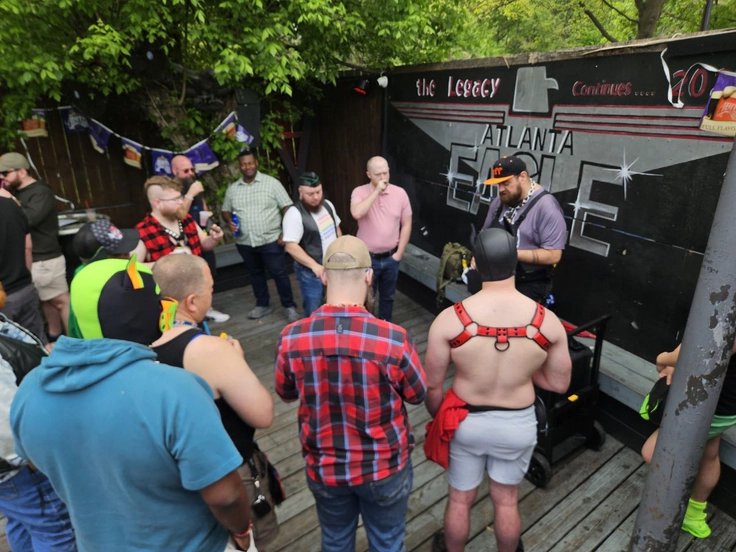 Sharing knowledge is another way of building pack.
Every once in a while someone asks me why I spend time teaching classes in the pup and kink community. The question is usually asked with genuine curiosity. Some people assume it must be about recognition or visibility. Others assume it is about experience or authority.
For me the answer is much simpler than that. I teach because someone once took the time to teach me.
When I think about where that instinct really started, my mind often goes back to meeting Sir Alan and pup NITRO almost fourteen years ago. They were the kind of leaders you notice immediately, not because they demanded attention, but because of the way they treated the people around them. They were patient with newcomers and answered questions honestly. They never made anyone feel foolish for asking something basic. Whether the conversation was about gear, negotiation, or different types of play, they approached it with openness and respect.
Watching them interact with people showed me what leadership in this community could look like. It was not about titles or authority. It was about mentorship. It was about creating space where people felt comfortable learning and exploring who they were. That example stayed with me long after those conversations ended.
I also think a lot about my friend Race Bannon. One of the things I admire about Race is how often he asks questions about the status quo. He challenges people to think about why we do things the way we do and whether those traditions still serve the community. That curiosity is another form of leadership. It encourages education, discussion, and growth instead of simply accepting things because they have always been done that way.
Then there is my friend and mentor Midori, who taught me a great deal about rope play. One of the most important lessons she shared was that rope is not always about perfect technique or intricate patterns. What matters most is the connection between partners in the scene. Rope can be a way of communicating trust, presence, and care. That perspective changed the way I think about teaching. Skills and techniques matter, but they are only tools. What really matters is the relationship between the people using them.
Beyond those well known mentors, there are countless friends who have taught me things in smaller play settings over the years. Those moments are often quieter and less formal, but they can be just as meaningful. Through those experiences I learned about building trust, playing safely, and understanding some of the traditions that exist within different parts of the community.
While I do not personally follow strict protocols, learning about them has helped me better understand the people who do. It allows me to enter those spaces with respect and awareness and to work comfortably with partners whose dynamics or traditions may be different from my own.
As I spent more time in the community, I began to realize that if I had benefited from that kind of generosity, I had a responsibility to pass it forward.
Teaching started in small ways through conversations at events. Sometimes it was helping someone understand how to care for their gear. Other times it was talking through safety considerations around different types of play. Over time those conversations slowly turned into something more formal.
Now I occasionally find myself standing in front of a room teaching topics like pup gear care, electro play basics, rope techniques, or mummification scenes.
What surprises me most about teaching is how often the real teaching happens after the class ends.
After a mummification class I taught back in October, several pups came up afterward with questions. Some wanted to look more closely at the materials I had used. Others simply wanted to touch them and understand how they worked. We talked about safety, communication, and how scenes like that could be adapted for their own play spaces. It was not really about the technique anymore. It was about helping people feel confident enough to explore responsibly.
Something similar happened after my last gear care class. A pup came up holding his hood and asked if I could help him clean it. He was worried it might be beyond saving. We talked through what kind of material it was made from and how to care for it properly. By the end of the conversation he realized it probably just needed the right cleaning process. Watching the relief on his face was a good reminder that sometimes teaching is not about complicated skills. Sometimes it is simply about helping someone feel capable of taking care of the things that matter to them.
One experience that stays with me involved a friend who had been curious about sounding. He was interested in exploring it but was nervous because he did not know where to start and had not found anyone he felt comfortable trying it with.
Instead of rushing into anything, we took our time. I demonstrated on myself first so he could see what the process looked like and understand the safety considerations involved. Then I let him hold the instrument and observe while I used it. That gave him space to become familiar with the tools and ask questions without feeling pressure.
Only after that did I let him decide if he wanted to try it himself and whether he wanted help.
By the end of the experience he was relaxed, smiling, and excited about what he had learned. Moments like that remind me why education matters so much in kink spaces. Curiosity is natural, but curiosity without guidance can sometimes lead to anxiety or unsafe experimentation. When people are given information, patience, and the freedom to move at their own pace, exploration becomes something empowering instead of intimidating.
Teaching has also changed the way I think about visibility within the community. The more people recognize you, the more important it becomes to model the kind of culture you want to see around you. For me that culture is built on curiosity, respect, consent, and care for one another.
Teaching is one way I try to contribute to that.
When I show someone how to safely care for their gear or help demystify a type of play that seemed intimidating, I am not just sharing information. I am helping lower the barrier for someone to explore who they are.
Sometimes that moment of understanding becomes the beginning of someone else’s journey.
Just recently I had the chance to teach again at Spring Training. Standing in front of that room, sharing things I have learned over the years, felt a little surreal.
The first time I attended Spring Training after my divorce, I arrived alone and unsure of what I would find. I had no idea that weekend would become the starting point for rebuilding community and rediscovering parts of myself that had been quiet for too long.
Coming back now as someone teaching and helping others explore their own curiosity felt like a quiet moment of reflection. It reminded me how much can change when people choose to show up for each other.
In many ways teaching is simply another form of pack building. It is one pup sharing what they have learned so the next pup has an easier path. The strongest communities are not built on secrecy or exclusivity. They are built on knowledge, trust, and the willingness to help each other grow.
That idea is also part of what #UnapologeticallyPuppy means to me.
It means showing up honestly as who you are. It means sharing what you know without gatekeeping. It means creating spaces where curiosity is welcomed and where people feel safe enough to ask questions.
Someone once made space for me.
Teaching is one way I try to make space for the next pup who walks through the door.
And if that pup eventually turns around and teaches someone else, then the cycle continues. Knowledge spreads. Confidence grows. Pack becomes stronger.
That is the kind of community I want to help build.