
When It Outgrows You
Sometimes the greatest measure of something you built is discovering it no longer needs you to survive.
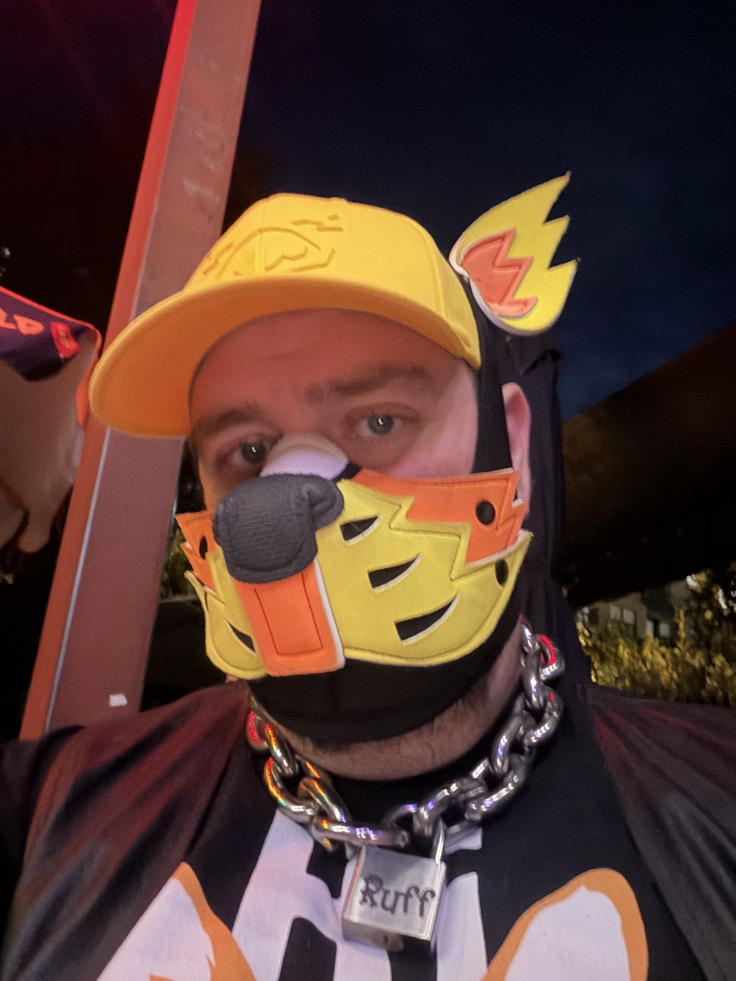 The best things we build aren't monuments to ourselves. They're foundations for someone else.
Sometimes the greatest measure of something you built is discovering it no longer needs you to survive.
Before leaving for my recent trip to Salt Lake City, I found myself scrolling through the event calendar for Try-Angles.
There it was.
Leather, Gear, and Pup Night.
I couldn’t help but smile.
Fifteen years ago, alongside three close friends, I helped start what was then simply Leather and Gear Night. We believed Salt Lake City needed a regular place where people interested in leather, rubber, gear, and other forms of self-expression could gather outside of the occasional special event. It wasn’t about throwing a party. It was about creating consistency—a place where people knew they could show up month after month and find others who understood them.
I still remember wondering whether anyone would actually show up. The four of us spent countless hours planning those first nights, and for all we knew it might end with us standing around awkwardly, hoping we hadn’t completely misjudged what Salt Lake City needed. Every new face that walked through the door felt like a victory. Every familiar face that returned the following month gave us hope that maybe we were building something worth keeping alive.
That work became even more meaningful during my year as Rocky Mountain Leather Sir. One of the lessons that title reinforced was that communities aren’t built by the big weekends everyone remembers. They’re built by the recurring nights, the familiar faces, and the spaces where someone can walk through the door for the first time and know they’ll be welcomed.
Looking at the calendar this year, I realized something had changed.
It wasn’t just Leather and Gear Night anymore.
It had become Leather, Gear, and Pup Night.
That simple change in the name said everything.
The event hadn’t simply survived. It had evolved. As pet play continued to grow, the event grew alongside it. New organizers brought new ideas. New generations shaped it into something that reflected the community as it exists today rather than the one we knew fifteen years ago.
Looking at that calendar, I realized something that surprised me. I wasn’t disappointed that I wasn’t organizing it anymore. I was proud that I didn’t have to be.
The event had outgrown us.
That thought stayed with me throughout the rest of my trip.
Utah will always occupy a unique place in my story. It’s where my career with Delta began. It’s where I learned how to live on my own. It’s where lifelong friendships were formed. Even though life has taken me to Atlanta, London, and countless other places since then, Salt Lake City will always be one of the places that helped shape who I was becoming.
This visit wasn’t about chasing nostalgia. It was about appreciating the foundations that were laid there. I spent time with my sister and brother-in-paw, wandered through the aquarium laughing over animals that somehow become even funnier when you’re with family, and found myself driving roads that my hands seemed to remember even when my mind didn’t. It wasn’t a trip filled with grand adventures. Instead, it was filled with quiet moments that reminded me how comforting familiar places can be.
There’s something strangely beautiful about becoming unnecessary.
That probably sounds backwards. We spend so much of our lives trying to matter. We want our work to be recognized, our ideas remembered, and the things we pour ourselves into to leave a lasting mark. Somewhere along the way, it’s easy to believe that if something continues to exist, it must continue to need us. We begin to tie our own sense of worth to being indispensable.
The older I get, the more I’ve come to believe the opposite.
Sometimes the greatest measure of something you built is discovering it no longer needs you to survive.
There are probably people attending that event today who have no idea who those original four organizers were. They’re making new friends, building new traditions, and creating memories in a space that has continued to evolve because others cared enough to carry it forward.
I don’t find that sad. I find it incredibly fulfilling.
When we’re building something, it’s easy to believe our responsibility is to keep it alive forever. We convince ourselves that if we step away, everything we’ve worked for will disappear. But that’s never really the goal. The goal isn’t to create something that depends on us indefinitely. The goal is to create something meaningful enough that other people choose to continue it.
That’s what stewardship means to me. It isn’t ownership. It’s caring deeply enough about something that you’re willing to let it become someone else’s turn.
I’ve been thinking about that a lot lately because, in many ways, I find myself at the beginning of that journey again.
Today I’m helping build the Georgia Kennel Club here in Atlanta. Our vision is to create a welcoming organization for pets of every type and the handlers who support them. Whether someone identifies as a pup, kitten, pony, fox, dragon, or something entirely their own, we want to create a place where people can learn, connect, play, and build lasting friendships.
The difference is that I’m approaching this project with fifteen more years of perspective.
When we started Leather and Gear Night, I was focused on making next month happen. Today, I’m thinking about what I hope exists fifteen years from now. I don’t want the Georgia Kennel Club to depend on the handful of people helping launch it. I want new volunteers to step forward. I want new leaders to bring ideas we never considered. I want future generations to shape it into something we can’t even imagine today.
Maybe one day someone will glance at a calendar, see a Georgia Kennel Club event still thriving, and never once wonder who helped organize the very first meeting.
If that happens, I won’t see it as being forgotten. I’ll see it as success.
The older I get, the more I realize this lesson extends far beyond events. I hope the classes I teach inspire someone else to become an educator. I hope the articles I write give someone permission to embrace who they are a little sooner than I did. I hope Ruff Beacon continues helping people discover pet spaces long after I’ve written my last line of code. None of those things should depend on me forever.
Because the best things we build aren’t monuments to ourselves. They’re foundations for someone else.
Maybe that’s what legacy really is.
It isn’t about making sure people remember who you were.
It’s about creating something that gives other people a place to belong, long after you’ve stepped aside.
Fifteen years ago, four friends hoped a handful of people might show up.
Today, that event—and the people it continues to bring together—don’t need us anymore.
I can’t think of a better ending than that.