
The First Time I Realized Ruff Wasn’t Temporary
Rediscovering the parts of myself I stopped believing could survive ordinary life.
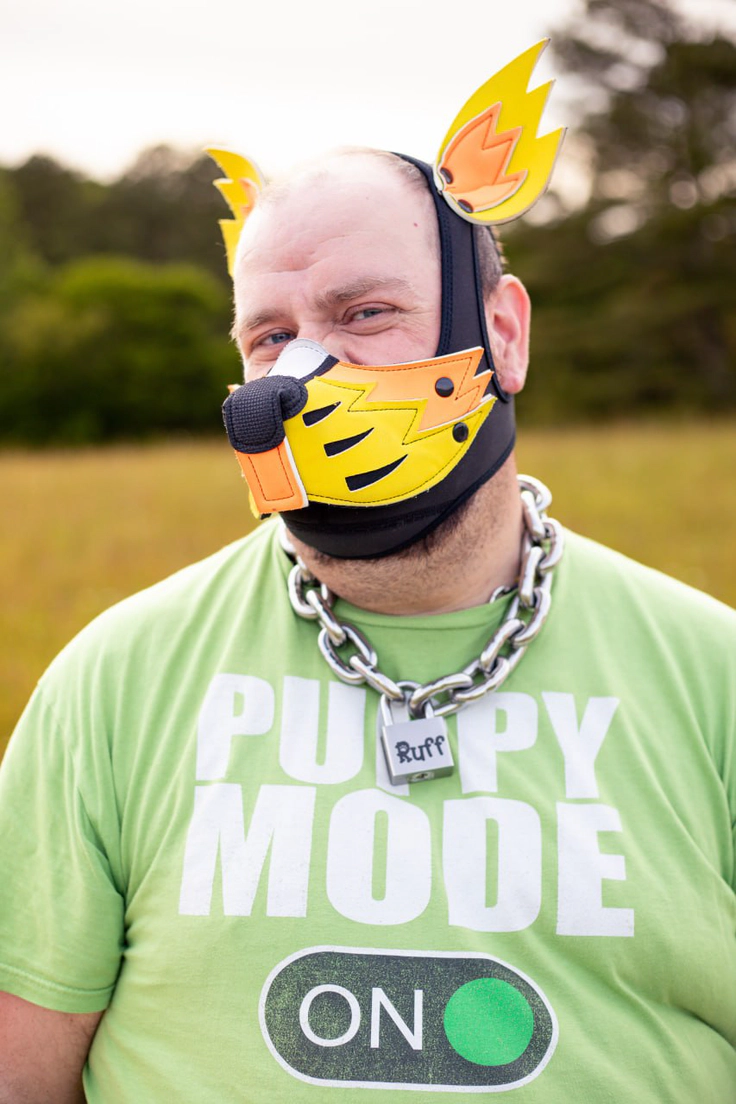 Somewhere along the way, I stopped treating Ruff like somewhere I visited and started realizing he had become home. Thanks to Pup Dante for tthe great photo.
The First Time I Realized Ruff Wasn’t Temporary
Twenty years ago, I treated Ruff like somewhere I visited.
At the time, I did not fully understand what I was feeling, let alone how to embrace it openly. I only knew that something shifted whenever I stepped into pup spaces. I felt lighter there, less guarded, more playful in a way that felt strangely natural instead of performative. There was a freedom in it that I could not fully explain back then, and I definitely did not yet know how to live #UnapologeticallyPuppy. So I compartmentalized him.
Ruff existed in carefully controlled spaces. Bars. Events. Campgrounds. Conventions. Hotel rooms before nights out. He appeared in moments where I felt safe enough to let him breathe, and then quietly disappeared again when real life resumed on Monday morning. For years, I assumed that was what this identity would always be: a version of myself I could visit temporarily, but never fully become.
Looking back now, I think a lot of queer people understand that instinctively because many of us grow up learning how to code-switch long before we ever hear the term for it. You learn how to adjust yourself depending on the room you are standing in. Which voice feels safest at work. Which interests feel acceptable around family. Which mannerisms need softened. Which parts of yourself stay hidden until trust has been earned. After enough years of doing that, compartmentalization stops feeling temporary and starts feeling normal.
And the strange thing about code-switching is that even when it protects you, it can quietly teach you to experience authenticity in limited doses. You start treating parts of yourself like places you visit instead of places you are allowed to live.
For me, Ruff lived inside one of those compartments for a very long time.
For a large part of my marriage, he barely existed at all. Not because he was gone, but because I had become very good at ignoring the pull. Somewhere along the way, adulthood became maintenance. Responsibilities replaced curiosity. Survival replaced exploration. I convinced myself that growing up meant becoming smaller, quieter, more manageable, and after enough years of that, it became easier not to ask questions about the parts of myself still tugging quietly at the edges of my attention.
Looking back now, I do not think I forgot Ruff entirely. I think I stopped believing there was room for him in the life I had built. So I packed him away carefully. Not with anger or shame exactly. More with resignation, like something important that I assumed no longer fit into my future.
The difficult thing about suppressing part of yourself for long enough is that eventually you stop noticing the absence directly. You just begin moving through life with a low-grade sense that something is missing. You become functional. Responsible. Productive. You learn how to survive. But surviving and feeling alive are not always the same thing.
I can see that now in ways I could not back then. There were years where, from the outside, my life probably looked stable and successful. I was building a career, managing responsibilities, doing everything adulthood was supposedly supposed to look like. But internally, I was slowly becoming disconnected from my own sense of playfulness, emotional openness, and joy. I did not realize how exhausting suppression had become until I stopped doing it.
It was not until last February that something finally shifted.
For the first time in years, I stopped waiting for Ruff to appear accidentally and started actively calling him back to the front of my life. Not just during scenes. Not just at events. In everyday life. In how I introduced myself. In how I moved through the world. In how I allowed myself to be seen.
At first, the changes were subtle. I started wearing gear more casually instead of treating it like something reserved for hidden spaces. I stopped apologizing for being playful. I stopped trying to make myself smaller or more polished to fit what I thought adulthood was supposed to look like. I allowed myself to lean fully into the chaos corgi energy that had apparently been waiting under the surface the entire time.
And strangely, once I stopped suppressing him, other people started noticing the shift too.
Friends, coworkers, and people who had known me for years began saying things like, “You seem happier lately,” or “What changed? You seem like you’re doing so much better.” At first, I did not really know how to answer those questions because from the outside, my life actually looked far less stable than it had before. My marriage had ended. My routines had changed. So many parts of my life were being rebuilt from scratch.
But internally, something very different was happening.
For the first time in years, I was no longer spending enormous amounts of energy trying to suppress myself.
And once that happened, Ruff stopped staying behind when the weekend ended.
I started noticing him everywhere. At work, I would catch myself growling jokingly at a computer issue before realizing what I had done. I started giving coworkers the “puppy wave” in hallways without thinking about it first. Small things. Silly things, honestly. But they mattered precisely because they were unconscious. They were not performances reserved for designated spaces anymore. Ruff had stopped being something I put on and started becoming part of the way I naturally moved through the world.
Somewhere along the way, hearing people call me Ruff started feeling more natural than hearing the government name. That probably should have been my first clue that this was no longer temporary.
But I think the deeper realization came through travel.
For years, travel had mostly felt transactional to me. Airports. Hotels. Tight itineraries. Work trips. Constant movement. Then slowly, almost without realizing it, I started bringing Ruff with me.
London was one of the first places where I truly felt that shift happen. Not because anything dramatic occurred there at first, but because it felt natural. Ruff was no longer something confined to designated scenes or events. He was simply present there, wandering through the city, laughing in pubs, existing openly in spaces that once felt impossibly distant from my ordinary life.
And honestly, one of the biggest turning points in my life happened because of that shift.
In September, I made a conscious decision to stop hiding so much of myself in London. I stopped treating Ruff like something that only appeared conditionally or existed safely behind layers of distance and compartmentalization. I let him exist more openly. I took social risks I probably would not have taken years earlier. I allowed myself to be visible in a way that would have terrified an earlier version of me.
And that was how I met Kuma.
Looking back now, I do not think that was coincidence. If I had still been compartmentalizing myself the way I had for most of my adult life, I genuinely do not think that connection would have happened the same way. Meeting him required me to show up authentically first, not as a carefully managed version of myself or someone trying to appear emotionally guarded and controlled. Just Ruff.
What started as attraction and connection slowly became something much deeper than I expected because the relationship never felt disconnected from reality. It became woven into ordinary life instead. Long conversations across time zones, ridiculous stickers sent during workdays, affectionate check-ins from airports and trains, conversations about exhaustion, schedules, emotions, travel plans, and daily life all began sitting naturally alongside collars, pup identity, intimacy, and connection.
At some point, the relationship stopped feeling like something extraordinary happening outside the rest of life and instead became part of life itself. Honestly, I think that mattered just as much as any major milestone because it is easy to feel authentic during extraordinary moments. The harder thing is allowing authenticity to survive routine.
And eventually there were moments that would have been unimaginable to an earlier version of me. Standing in India wearing a one-kilogram chain collar engraved with “Ruff” around my neck, I realized that instead of feeling exposed, I felt grounded. Safe. Connected. People stared sometimes, and a few asked questions, but what stayed with me most was the realization that I no longer wanted to hide it. The collar no longer felt like performance. It felt like alignment.
Sydney changed something in me too. My birthday there was one of the first times I fully allowed myself to receive joy without immediately questioning whether I deserved it. I stopped bracing for happiness to disappear the moment I acknowledged it. Somewhere during that trip, I realized I no longer felt like I was borrowing this life temporarily.
I was actually living it.
That same realization followed me into teaching.
Returning to Spring Training felt unexpectedly full circle. Years earlier, that was one of the places where I had first started rediscovering myself. Coming back now felt completely different because I was no longer questioning whether this side of me was real. I had brought him with me.
Standing in front of a room teaching rope or electro and watching people connect, laugh, learn, and trust me, I realized I felt calmer as Ruff than I ever had trying to perform perfection or professionalism elsewhere in my life. Ironically, the more authentic I became, the more grounded and capable I actually felt.
That realization followed me into community spaces too. At Furry Weekend Atlanta, during Moonlight, during Pup Night, during quiet conversations in hallways after panels, I started realizing people were not responding to some carefully constructed image. They were responding to authenticity. To openness. To someone visibly allowing himself to exist without apology.
The first time someone tapped the NFC chip in my hand just to say hello felt surreal. Then it kept happening. People recognizing me internationally. People following along with where Ruff might appear next. People saying my name with familiarity before I introduced myself.
None of those moments felt enormous individually. Together, though, they formed a pattern. A life.
And I think that was the first time I realized Ruff was not temporary.
Not because people recognized me. Not because I started teaching or writing publicly. Not because I became more visible within the community.
The real shift happened when I realized I was no longer waiting for this part of myself to disappear.
Ruff was no longer being held together by adrenaline, secrecy, fantasy, or the emotional intensity of isolated weekends. He had survived ordinary life. Work stress. Airports. Quiet mornings. Relationships. Grief. Growth. Daily routines.
He had become woven into the person I actually am instead of existing as a version of myself I borrowed temporarily.
For most of my life, I thought authenticity was something fragile, something that could only exist in carefully controlled environments. What I eventually learned was that the strongest identities are not the ones that appear during extraordinary moments. They are the ones that remain after the moment ends.
I did not create Ruff.
I rediscovered him.
And somewhere along the way, I stopped asking whether he was real.
The better question became what responsibility comes with finally believing he is.