
The Confidence Nobody Sees
Real confidence isn't knowing how the night will end. It's walking through the door anyway.
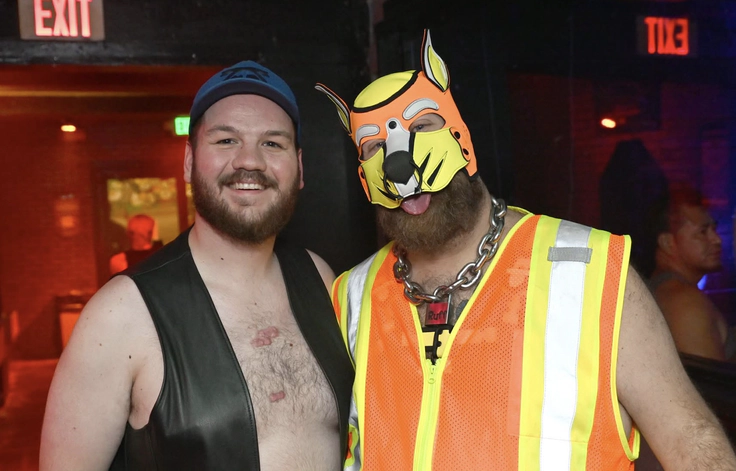 Sometimes the strongest thing you can do is show up before you know how the story ends.
I’ve been thinking a lot lately about something Kuma says to me from time to time.
It’s never said as a criticism. Usually it’s just an observation, almost in passing, the kind that doesn’t really register until weeks later when you suddenly realize he’s been right all along. He’ll tell me that I have a habit of putting expectations on experiences before they’ve even happened. At first I always brushed it aside. Of course I plan things. I like itineraries. I travel constantly. I manage projects for a living. Planning is practically part of my personality.
But planning and expecting aren’t actually the same thing.
I didn’t really understand that until a few weeks ago when I was sitting in therapy over Zoom talking about whether I should go to Pup Night.
Even now that sentence makes me smile because it sounds so absurd written down. Out of everything happening in my life at the time, I was trying to decide whether I could bring myself to spend a few hours with friends. If someone had looked at my calendar they probably would have thought there wasn’t even a decision to make. Pup Night has become one of those constants in my life. It’s where I reconnect with people I don’t see nearly often enough. It’s where new friendships seem to start over something as simple as a shared drink or a conversation about a hood. It’s familiar. Comfortable. Safe. It should have been the easiest “yes” imaginable.
Instead, I found myself staring at my therapist on a laptop screen saying, “I don’t know if I want people to see me like this.”
She asked what I meant, and I remember sitting there realizing I didn’t actually have a good answer.
I wasn’t in crisis. I wasn’t angry. I wasn’t devastated. I was in the middle of changing medications for anxiety, and if you’ve ever gone through that process you’ll probably understand the strange emotional fog that can settle in while your brain adjusts. Nothing feels dramatically wrong, but nothing feels entirely right either. The edges of your personality blur a little. Things that usually feel effortless suddenly ask for energy you aren’t sure you have. You begin questioning decisions that, only a month earlier, wouldn’t have required a second thought.
Somewhere during that conversation I realized I wasn’t worried about going to Pup Night.
I was worried about not being the version of myself I thought belonged there.
That’s a very different fear.
The version of Ruff that lives in my own imagination is always ready to socialize. He walks through the door, hugs everyone he knows, somehow finds himself in four conversations at once, laughs too loudly, stays later than he planned, and goes home tired in the best possible way. That’s the version I quietly expected myself to be every single time.
The problem was that I didn’t feel like him that day.
My therapist listened to me talk through all of that before asking a question that seemed almost unfair in its simplicity.
“What happens if your friends meet the version of you that exists today?”
We moved on to other things before the session ended, but that question stayed behind after I closed my laptop.
The next couple of hours were spent doing everything except deciding whether I was actually going. I wandered around the house, started cleaning things that didn’t need cleaning, picked up my hood before setting it back down again, checked the time far more often than necessary, and briefly convinced myself that staying home was probably the responsible decision. Anxiety has a remarkable ability to disguise itself as practicality. It rarely tells me to do something outrageous. It just presents perfectly reasonable alternatives until they begin to sound like common sense.
By the time I got into the car, I still hadn’t really decided whether I was going. I think I was simply driving in the general direction of the answer.
I remember sitting in the parking lot for a few minutes watching people disappear through the front door. There was laughter outside. Familiar faces greeting one another. The ordinary beginning to an ordinary evening, except it didn’t feel ordinary from where I was sitting. I was trying to figure out why something I genuinely wanted to do suddenly felt so difficult, and the only explanation I could come up with was that everyone else seemed to know how to exist so effortlessly.
It’s funny how convincing that illusion can be.
We spend so much time watching the version of other people that made it through the door that we forget they all had a parking lot too. Maybe not a literal one, but some quiet place where they wondered if they should go home instead. We don’t get to see that part. We only ever meet the person who decided to show up.
Eventually, I became that person too.
The evening unfolded much the way Pup Night always does. Conversations drifted from one group to another. Someone wanted to tell me about an upcoming event. Someone else asked about work. There were hugs, laughter, catching up with people I hadn’t seen in weeks, the comfortable rhythm that develops when a room is full of familiar faces who don’t need much of an excuse to start talking.
At one point Avi looked at me and smiled.
“You seem a little quieter tonight.”
For a split second I felt every fear I’d carried with me into the bar come rushing back.
I knew it, I thought. They can tell.
Before I could even answer, he shrugged in that wonderfully casual way people do when they’re speaking from experience instead of sympathy.
“I know what that’s like,” he said. “I’m just glad you came.”
I’ve replayed that moment in my head more than once, not because it was dramatic but because it was so ordinary.
He noticed.
He understood.
Then we kept talking.
There wasn’t an intervention. There wasn’t an attempt to fix my mood. There wasn’t even an expectation that I become more animated as the night went on. The conversation simply continued because, to him, a quieter Ruff was still Ruff.
Driving home later that evening, I caught myself thinking about what Kuma had said all those months before.
Putting expectations on experiences.
I’d been doing exactly that.
Somewhere between ending therapy and pulling into the parking lot I’d quietly written an entire script for the evening. I had decided how social I should be, how much energy I should have, how many conversations I should have, how I should feel when I left, and how everyone else would probably react if I failed to meet those expectations.
None of those expectations had come from anyone else.
Not from my therapist.
Not from Avi.
Not from my friends.
Certainly not from the evening itself.
They all came from me.
The more I sat with that realization, the more I began noticing how often I do it.
I’ll build up a trip in my head until I’m chasing a version of it that never actually existed. I’ll worry about a conversation before it’s happened, already imagining the ways it could go wrong. I’ll convince myself that an event has to be meaningful, memorable, or transformative before I’ve even walked through the door. By the time the experience actually arrives, it isn’t competing with reality anymore. It’s competing with the story I wrote about it weeks earlier.
No wonder I sometimes struggle to simply enjoy what’s in front of me.
I’ve been busy comparing it to something that was never real.
I think that’s what Kuma means when he tells me to let the cards lie.
He’s never telling me not to care. He’s never asking me to stop planning or to stop hoping that good things happen. He’s reminding me that there comes a point where the cards have been dealt and the only thing left to do is play the hand that’s actually in front of you instead of wishing it looked different.
The strange thing is that I’ve spent years writing and teaching about authenticity without realizing I wasn’t always extending that same grace to myself.
I’ve told new pups there isn’t one correct way to be a puppy.
I’ve told people it’s okay to be awkward.
I’ve told friends that they don’t have to earn belonging before walking into a room.
Yet somewhere along the way I’d convinced myself that I did.
That I had to arrive already feeling confident.
Already feeling social.
Already feeling like the best version of myself.
Maybe confidence was never about any of those things.
Maybe confidence isn’t walking into a room convinced you’ll have a great night.
Maybe it’s walking into the room before you know what kind of night you’re going to have at all.
Maybe it’s trusting that the people who genuinely care about you aren’t waiting for a performance. They’re waiting for the person they’ve always known, whether he’s loud or quiet, anxious or relaxed, full of energy or simply doing the best he can that day.
I still catch myself writing stories before life has a chance to write them for me. I still build expectations that reality can never quite satisfy. I suspect that’s a habit I’ll spend a long time unlearning.
But now, whenever I notice myself trying to script an experience before I’ve lived it, I think back to that afternoon. I think about a simple question from my therapist, a quiet conversation with Avi, and something Kuma had been trying to teach me long before I was ready to hear it.
Then I take a breath, open the door, and let the cards lie.
Because maybe that’s the confidence nobody sees.