
Kink is funnier than people think
What laughter, mistakes, and unexpected emotions teach us about trust in kink
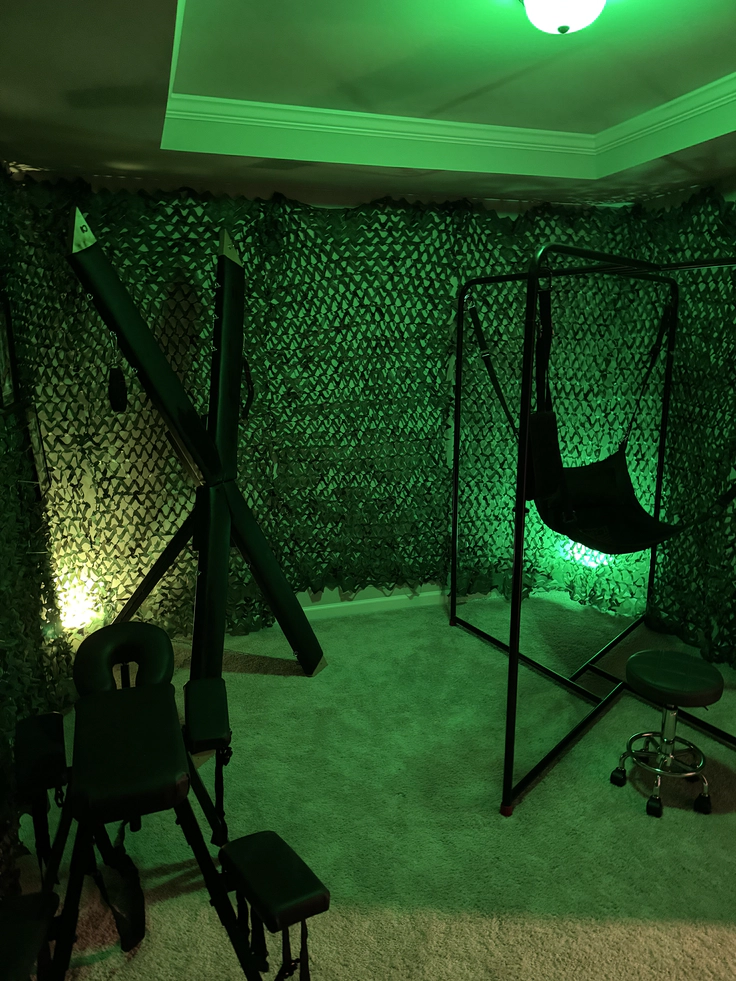 Laughter, honest check-ins, and the freedom to pause can turn unexpected moments into deeper trust.
Kink has a branding problem. From the outside, it appears to happen in dramatic lighting between people who never get a cramp, misunderstand an instruction, or spend five minutes trying to fasten something that looked remarkably uncomplicated when they bought it. Everyone appears composed. Everyone knows exactly what to say, and nobody accidentally farts and has a laugh.
Real kink, on the other hand, involves real people. Real people get tangled in ropes. They lose their train of thought. Their bodies make unexpected sounds. Sometimes a carefully constructed atmosphere collapses because someone says the wrong word or because the supposedly intimidating piece of equipment begins behaving like an uncooperative flat-pack piece of furniture. I used to think that laughter meant the moment had been ruined. Now, I see it as part of what makes a scene feel real.
Laughter is part of almost every one of my play sessions these days. I used to take it so seriously: lighting, music, visuals. We’ve gotten this false impression of what a scene should be like from carefully edited content and staged photos. Those are fine and hot, but real scenes rarely unfold as perfectly as edited content suggests.
I will never forget a play date years ago when I wanted the guy to come in and find me blindfolded in the sling, ready for him to have his way with me. It was back in my heavier days—or, as Alpha jokingly calls them, my “half-ton ruff” days. I had climbed into the leather sling, slid the blindfold over my eyes, and waited. I heard the door open and footsteps enter the playroom. Then it happened. I felt a pop, and suddenly I was on the floor. The leather sling was not reinforced; it had broken under my weight, and I had tumbled to the ground. After a moment of awkward silence and some self-assessment, I realized I was okay. We both burst into laughter. We sat for a minute and talked, then adjusted our plans and found another way to play. I learned two important lessons that day: one, a five-hundred-pound man really should be using a reinforced canvas sling; and two, it’s okay to laugh. I think the two of us that day had far more fun because we allowed ourselves to be vulnerable with one another.
We get so used to seeing these polished scenes that we forget that sometimes a cramp can occur from being in a position for too long and that your body makes noises from having air forced into places. We also forget the most important parts of a scene: checking in, pivoting when things don’t work, and stopping a scene when things get to be too much. Those are the things we forget to emphasize when we are teaching and being role models to others. These skills help keep play safe and make it easier to build lasting trust with a partner. If you can trust your partner to help you recover from a SNAFU or provide appropriate care when a body part cramps up, it deepens that relationship and builds trust.
Shared laughter in a scene can also be a sign of releasing nervous tension. This is what turned me on to gunge play. I gave myself permission to laugh, look ridiculous, and make a mess. As I was laughing, I felt all of that tension in my body melt away as I shared the laughter with my partner. We had intended to try to keep the mess contained. It didn’t happen that way. There was a playful splash to the face that resulted in an immediate “Oops, I got some on the carpet.” It was met with a playful “Eh, fuck it. This is fun.” We ended up making an even bigger mess, and that was okay. Mistakes are survivable. You can fall out of a sling, you can make a mess where you were trying not to, and you can even have a violet wand stop working in a demo about electro. What’s important is not letting it ruin the moment. Have a backup plan and take time to reassure one another that everything is still okay.
I also need to note that there is a big difference between laughing with someone and laughing at them. Nervous laughter can also communicate discomfort. This is why you should regularly check in with one another. There can be emotional release from play that people aren’t expecting. If you aren’t prepared for that possibility, you may mistake an emotional release for shared laughter. Joining in without first checking on your partner can be hurtful and disrupt the scene.
Years ago in Las Vegas, I was a submissive for my first flogging scene. I was apprehensive about what that experience would be like. Impact play can look very intimidating from the outside. There are loud cracks and redness on the skin; sometimes, you can even break skin. I trusted this Dom very much. I had seen him play with others, and I had heard that he was the person to see if I wanted to find out whether flogging was for me. I remember leaning against the cross and feeling that first hit land. It wasn’t as painful as I expected. In fact, it was gentle and warm. He continued to warm up my skin, bringing in a second flogger to alternate on my back. As he began to go harder, I felt a very unexpected emotion rising to the surface. I found myself crying. Not from pain, but from a deep emotional release. I wasn’t sure what it was or why it was happening, but he immediately noticed, stopped what he was doing, and came in to put a hand on my back, lean in, and ask if I was okay. I told him I wasn’t hurt and that I was quite enjoying how relaxing the experience was. He reassured me that it was okay to let out whatever was bottled up inside and that sometimes it’s the body’s way of releasing stress, anxiety, and tension. He took several minutes to help me process what I was feeling and reassure me that everything was okay. Then I asked if he was okay continuing, and we played for another couple of hours. It was one of the strongest connections I had ever felt with a play partner. It’s also what made me realize, as I continued to explore my kinks and interests, that it’s okay to laugh, cry, and sometimes be a little bit scared. The key is to not try and hide those emotions from your partner. Work through them and learn from them.
It’s okay to be silly, to ask for a break, or to stop a scene altogether. The strongest scenes are not the ones where no one breaks character. The ones that remain memorable and help you grow are the ones where you can laugh, check in, begin again, and still trust that nothing important has been lost.
The fantasy may have dramatic lighting and music. The real thing may have a cramp, a broken sling, unexpected tears, or something spilled on the carpet. I will gladly take that version where we can laugh, check in, and continue to trust one another. We don’t build trust by never breaking character. We build it in what happens next: the pause, the check-in, the reassurance, and the decision to continue or not. The unexpected moment isn’t necessarily an interruption of the scene. Sometimes it’s the most intimate part.